Premium Barhi Date Palm Tissue Culture Plants – Certified Commercial Barhi Palm for Professional Farming & Agricultural Investment
الفارس لتقنيات الزراعة المستدامة
٤٬٦٠٠ ج.م
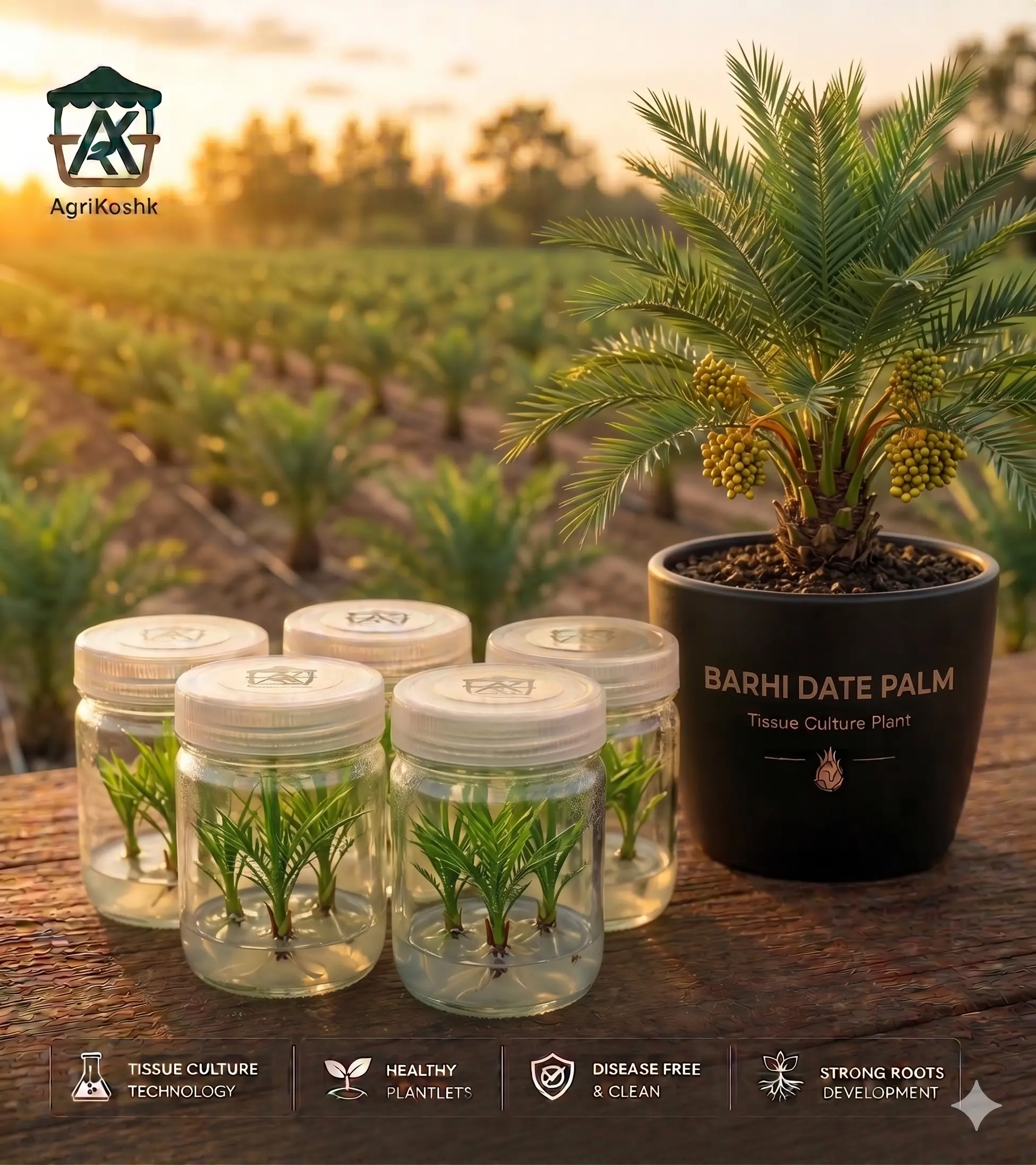
Agri Koshk offers premium Barhi Date Palm (Phoenix dactylifera L. cv. Barhi) plants produced through advanced Tissue Culture propagation at Elfares Laboratory for Sustainable Agricultural Technologies. These laboratory-propagated plants are developed using modern micropropagation techniques to produce genetically uniform, vigorous, and high-quality planting material suitable for commercial farms, agricultural investment projects, and modern date palm plantations.
Barhi is one of the world's most valuable commercial date palm cultivars and is highly recognized for its crisp, sweet, bright-yellow fruits harvested at the Khalal stage. The fruits may also be consumed at the Rutab and Tamar stages depending on market demand. Because of its outstanding fruit quality and strong consumer preference, Barhi has become one of the most profitable date palm cultivars grown in many date-producing countries.
Key Features
• Produced through advanced Tissue Culture propagation. • Excellent genetic uniformity. • Vigorous root development. • Rapid field establishment. • Suitable for commercial plantations and investment projects. • Premium fruit quality with high market value. • Adapted to sandy and reclaimed soils with proper irrigation. • Reduces the variability associated with conventional offshoot propagation.
Climate Requirements
Barhi palms perform best under hot, dry, and semi-arid climates. They tolerate extremely high summer temperatures and require full sunlight throughout the day for maximum vegetative growth, flowering, and fruit production.
Soil Requirements
Well-drained sandy or sandy-loam soils are preferred. The cultivar also performs well in calcareous soils when properly managed. The recommended soil pH ranges from 6.5 to 8.0, while prolonged waterlogging should always be avoided.
Planting Season
Plants can be established throughout the year under modern irrigation systems, although spring and autumn are generally considered the best planting seasons to reduce environmental stress.
Planting Method
Prepare a planting hole according to the root system size, incorporate well-decomposed organic matter, position the plant with the growing point above soil level, irrigate immediately after planting, and provide support if necessary during establishment.
Plant Spacing
• 7 × 7 meters. • 8 × 8 meters for commercial plantations. • Adequate spacing improves sunlight penetration, machinery access, and air circulation.
Irrigation
Young palms require regular irrigation until fully established. Water requirements increase gradually with plant age and seasonal temperatures. Drip irrigation is strongly recommended. Avoid prolonged drought as well as excessive irrigation or standing water around the root zone.
Fertilization
Fertilization programs should always be based on soil and irrigation water analysis. In general, Barhi palms benefit from annual organic matter applications, balanced nitrogen during active growth, phosphorus for root development, potassium for improved fruit quality, calcium, magnesium, and micronutrients such as iron, zinc, manganese, and boron whenever deficiencies are identified.
Crop Management
Routine crop management includes weed control, irrigation monitoring, removal of unwanted offshoots when appropriate, pruning of dry fronds, regular field inspection, and maintaining overall orchard sanitation.
Common Pests
Major pests include the Red Palm Weevil, scale insects, mealybugs, stem borers, and rodents in some production regions. Regular inspection and Integrated Pest Management (IPM) programs are highly recommended.
Common Diseases
Potential diseases include root rot, black scorch, and several fungal diseases associated with excessive soil moisture and poor drainage. Proper irrigation management and good soil drainage significantly reduce disease pressure.
Flowering and Harvest
Depending on plant age and management, palms begin fruit production several years after planting. Fruits develop through the Kimri, Khalal, Rutab, and Tamar stages, with the bright-yellow crispy Khalal stage being the most commercially valuable.
Expected Productivity
Yield increases progressively as palms mature and depends on tree age, orchard management, environmental conditions, pollination efficiency, irrigation, and nutrition.
Tips for Maximum Productivity
• Start with premium tissue culture plants. • Maintain balanced irrigation. • Perform soil and water analysis. • Pollinate at the correct flowering stage. • Thin fruit clusters when necessary. • Monitor Red Palm Weevil continuously. • Follow balanced nutrition programs throughout the year.
Common Mistakes
• Planting in poorly drained soils. • Over-irrigation. • Ignoring Red Palm Weevil monitoring. • Random fertilization without analysis. • Planting in shaded locations. • Delaying routine orchard maintenance.
Frequently Asked Questions
Are these plants suitable for commercial plantations? Yes. Barhi is one of the world's leading commercial date palm cultivars.
Are these Tissue Culture plants? Yes. They are produced through certified Tissue Culture propagation to ensure genetic uniformity and high-quality planting material.
Can they be grown in desert and reclaimed lands? Yes, provided that proper irrigation, drainage, and crop management practices are implemented.
Does Barhi tolerate high temperatures? Yes. It is highly adapted to hot and semi-arid climates and performs exceptionally well under full sunlight.
متوفر